Monday, November 29, 2010

Guest Blog - Leon H. Gildin author of The Polski Affair


I am very excited today to have Leon Gilden, the author of The Polski Affair, as a guest on my blog. His novel sounds very intriguing and I can't wait to read it. Stay tuned for a review and giveaway of this novel in the near term future when I receive the book.

Inner conflict
by Leon H. Gildin, www.leongildin.com

Let me tell you something about myself and how I came to write an award-winning novel dealing with a woman's innermost thoughts.

Some thirty years ago I practiced law in New York and had a client who was a film and stage producer, intellectual and a professor of religious studies at a major seminary. One day he brought a friend into my office by the name of Abraham Shulman who was introduced as a newspaper man and author who wrote in both Yiddish and English.
Shulman and I got along well; he was a very bright guy, but a bit of a "noodnik" (a nuisance). He'd come into the office without an appointment, would sit and talk regardless of what I had to do and when it came time to pay a fee, he vanished. Nevertheless, I liked him and I would always read what he wrote and, if the truth be known, enjoyed his stories and his conversation.

One day Shulman came in with his latest "magus opus," a book entitled "The Case of the Hotel Polski," published by Holocaust Press and distributed by Schocken Books. Those names alone made me realize that it was something of value. I don't recall whether he ever told me what got him interested in the subject matter. "The Case of the Hotel Polski" was a bizarre and unbelievable story about a Nazi plot to trade Jews who survived the destruction of the Warsaw ghetto in 1943 for Germans interned in foreign countries. A strange and hitherto unknown piece of the Holocaust.

The book consisted of a lengthy introduction dealing with Shulman's research and then recounted interviews with "guests" of the hotel, telling how they got there, what went on there and how they survived. It was fascinating and as Shulman said at the end of his introduction, words to the effect, the more that was learned, the more confused the conclusion.

I put the book away for, I don't know how long, but the stories of the survivors never left me. Years later, I reread it and decided that the material would make an absorbing stage play. I was familiar with playwriting but after two scenes it became obvious that there were so many characters that a play would not work. So back in the drawer it went, but I kept my notes in a separate folder.

I retired, came to live in Arizona and now I had time to write. I found the old folder with my notes and my scenes, I found the book but this time when I read it I underlined and copied those facts and those interviews that I felt would be relevant in telling the story.

It was my decision that an attractive woman who had survived the horror of the destruction of the ghetto and told her story would be the most intriguing. But one story was not enough. I had to introduce more characters, more action, more situations, all culled from the interviews. It was also important to show how absurd the Nazi plan was, assuming they truly believed what they sought to accomplish could, in fact, be accomplished.

Rosa opens the story in her own words. She survived for reasons over which she has no control and, subsequently, meets and becomes both friends and family with another couple who survived for reasons totally beyond their control. When Rosa, now known as Anna (you must read the book to understand why the name change), learns that there is to be a reunion of survivors at the hotel she is driven, not by reason and against the wishes of her friends and family, but by her own demons, to attend. Her feelings, her emotions, her lies, her guilt, are what drive her throughout the story, despite her relatively good life in Israel.

I have spoken on many occasion about the book and am always asked why I wrote the book from a woman's point of view. The answer is that the essence of the story is, to a degree, derived from Shulman's interviews. Writing from a woman's point of view came about naturally, and the more I wrote the easier it became. Easy because what happened to the characters in "The Polksi Affair" was not planned. Their survival was fortuitous, and the story simply told itself.

The book won an award for historical fiction. Every place mentioned in the book is real: the hotel, the prison, the ghetto, the cemetery. The characters, what happens to them and how they survive, mostly all fiction.

So the most I can ask of the reader is to see if they understand my reason, my motivation for writing the book. And it is only fair that the reader know that the book caused many people to ask me what happened to the families after the book ended. That was a puzzling question. People who read the book wanted more. So I recently completed a sequel with the working title, "The Family Affair." A new agent/publisher is being sought, and I promise that anyone who buys and reads "The Polski Affair" as a result of this blog on Laura's Reviews and gets back to me at www.leongildin.com with their thoughts, will be entitled to a free copy of the sequel.

So let's be in touch.

Sunday, November 28, 2010

The Red Queen by Philippa Gregory

I love historical fiction and I always enjoy Philippa Gregory’s novels. Gregory has a gift to make historical fiction novels a very interesting and page-turning read. I loved The Other Boleyn Girl and read all of the subsequent Tudor dynasty novels. Last year Gregory moved her target to the War of Roses by writing about the York Queen, Elizabeth Woodville in The White Queen. In The Red Queen, Gregory focuses on the mother of Lancastrian Henry Tudor, Margaret Beaufort.

The Red Queen starts with Margaret as a young child. Enraptured by the tales she hears of Joan of Arc, Margaret determines that she is destined by God for greatness. This belief follows Margaret through her life from her marriage at age 12 to Edmund Tudor, the birth of Henry, her second marriage to Henry Stafford, and her third marriage to Thomas, Lord Stanley. The sole focus of Margaret’s life becomes to achieve greatness by having her son placed on the throne of England, no matter what the cost.

I enjoyed The Red Queen. I loved how Margaret was twisted by her mistaken religious beliefs. She attempted to appear to be a very religious and pious woman, but her thoughts and actions were anything but pious. It was also very amusing at how much she hated Elizabeth Woodville and how she tended to blame all bad things that happened in her life on the sins of others and never on her own actions. Although this book ended at the winning of her son Henry’s battle for the throne, it is not too much of a stretch to see how she became the mother in law from hell to Elizabeth of York.

Overall The Red Queen was a very readable and enjoyable historical fiction novel. I had never read any novels about Margaret Beaufort and I found the story very interesting. As a woman, I was very disturbed at how Margaret was wedded and bedded at the age of 12. Her horrific childbirth of Henry and then the subsequent separation of mother and child were heartbreaking. Poor Margaret led a cold and loveless life. I wish she could have run off with Jasper and raised her son . . . but then he probably never would have become Henry VII.

Book Source: The Kewaunee Public Library

Wednesday, November 24, 2010

A Darcy Christmas by Amanda Grange, Sharon Lathan, and Carolyn Eberhart

A Darcy Christmas is a Christmas collection of stories by Amanda Grange, Sharon Lathan, and Carolyn Eberhart involving our favorite Austen hero, Mr. Darcy and Elizabeth. I will review and summarize each story separately for a deeper look into the book.

The first story is “Mr. Darcy’s Christmas Carol” by Carolyn Eberhart. After helping out Lydia Bennet, Mr. Darcy never proposed to Elizabeth in this take on the tale. Christmas has come and the spirits of Christmas past, present, and future visit Mr. Darcy to show him the error of his proud ways and what life will be like without Elizabeth. I thought this was a great and inventive combination of Pride and Prejudice with the holiday classic A Christmas Carol. I especially liked how Scrooge gets a special guest appearance at the end of the story. Carolyn Eberhart is a debut author and I look forward to reading future works by her!

The second story is “Christmas Present” by Amanda Grange. Mr. Darcy and Elizabeth are happily married and are expecting their first child. Jane and Mr. Bingley have moved nearby and have just had their first child, a son. Mr. Darcy and Elizabeth visit the Bingleys to celebrate Christmas with them and the Bennet family. Much hilarity also ensues when Lady Catherine and Mr. Collins make a guest appearance. Christmas Present was a great story and Amanda Grange did an excellent job of bringing all of my favorite P&P characters back to life in a way true to the original novel.

The final story is “A Darcy Christmas” by Sharon Lathan. “A Darcy Christmas” is a great concept. Each chapter in the story is a different stage in Darcy and Elizabeth’s relationship from before their marriage, to newlyweds, to the birth and growth of their children. I liked the concept, but didn’t really like the actual stories. They moved very slowly. Some were great and others were lackluster. While I had read the first two stories in this book quite fast, I seemed to get stuck on this story.

Overall A Darcy Christmas was a very enjoyable holiday book that will get you in the spirit with your favorite Pride and Prejudice characters.

A Darcy Christmas is my twelfth item in the Everything Austen Challenge II.

Book Source: Advance Review Copy from Sourcebooks. Thank-you!

Fireproof Novelization by Eric Wilson Based on the Screenplay by Alex Kendrick & Stephen Kendrick

I watched and enjoyed the movie Fireproof at some point in the last year or two. My sister-in-law loaned me the novelization of the movie. Sometimes novelizations of movies are more miss than hit, but this novelization was definitely a winner.

Caleb Holt is a fireman and is captain of his team. While he is a fantastic firefighter and leader, his life at home is falling apart. Caleb and his wife Catherine do nothing but fight or avoid each other. It has gotten to the brink of divorce. Caleb’s father challenges him to try a 40-day Love Dare project. Caleb’s parents had used this project to repair their marriage. Caleb is skeptical at first, but finds himself changing and truly understanding the meaning of love.

I actually enjoyed Fireproof the novel even more then the movie. The novel had added scenes and background that really added to the overall story. The book was a very quick read and was highly enjoyable. It is a great book about relationships and what it takes to keep them going.

Book Source: I borrowed Fireproof from my sister-in-law.

Monday, November 22, 2010

Interview (and Giveaway) with Persia Woolley, author of Child of the Northern Spring


I am very excited to have Persia Woolley on my blog today. Ms. Woolley is the author of one of my favorite books, Child of the Northern Spring, which is being republished by Sourcebooks this month.
Ms. Woolley answered my burning questions for quite an intriguing interview. I am inspired by her research and also excited about her latest research and books in the works. The baby and computer woes have delayed my post today - but I'm finally getting it up! And without further ado . . . the interview!
LAG: I first read your Guinevere Trilogy as a teenager in the 1990’s. I recently reread Child of the Northern Spring and I find it just as engaging as I did as a teenager. What inspired you to write about the Arthurian legends from Guinevere’s point of view?
PW: I'd been re-reading Mary Stewart's Merlin Trilogy one evening on the terrace when all of a sudden Gwen and Lancelot appeared like a hologram in front of me, having a really fierce argument. Fascinated, I watched as he announced that everyone knew she consorted with old witches in the woods, and could easily have concocted the poison which she was being accused of trying to use to kill Arthur. Outraged, Gwen drew herself up and shot back 'Indeed, I've spent time with them, and learned their brewing crafts, AND drunk the stuff down, no matter how noxious. I've done all that and would do more, if it will make me able to give Arthur a child! Now can you, my fine fellow, say you would do as much for the king?" Neither imperious or whining, she was so proud and fierce and direct that I found myself saying "How did a nice girl like you get into a situation like that?" That's when I knew what my first novel would be, and who better to tell it than Gwen herself?

LAG: I love the historical setting after the Romans have left Britain. What made you decide to set the story during this time period instead of during the often used Middle Ages setting?
PW: I've always admired Mary Renault's Theseus books, The King Must Die and The Bull from the Sea, where she took the legend back to the time it would have originated and treated it as history, with reasonable explanations for things that were later overlaid with mythic meaning and power. People who do this are called 'euhemerists,' and I knew I wanted to approach my Guinevere that way. When I began to study the subject, it became clear the earliest references went back the 150 years between the fall of the Roman Empire and the conquering of Britain by the Saxons in 550 A.D. If my research had shown the story to have begun in the Middle Ages, that's when I would have set it.

LAG: How did you research the time period and Arthurian legends? Did you make any trips to the U.K.?
PW: Even in the 1980's there were many scholarly books on the subject. For the entire trilogy I put in 11 years of research and writing, and made four specific trips to Britain where I did nothing but travel the roads she would have, hiked up to every hill-fort and crawled around every Roman ruin mentioned in my work. I carried everything in my backpack, stayed in hostels, traveled mostly by bus and hauled home tons of books, maps and pamphlets. All told, it was one of the most exciting and rewarding projects of my whole life, and I did it between the age of 45 and 55.

LAG: Do you have a favorite character in Child of the Northern Spring? Guinevere is of course my favorite, but I loved Bedivere. His concern for Arthur, and all around gentlemanly behavior is fantastic.
PW: Bedivere is one of the earliest of Arthur's companions, and it is often suggested that the Breton Lancelot is simply a French attempt to co-opt the character of Bedivere. When you live with these archetypical personalities for such a long time, you develop a fondness for and understanding of most everyone. Even Morgan, for all her traditional hatred of Arthur, tugs at the heart when you think of her as the daughter cast aside to make way for her mother's new husband and baby. I'm partial to Nimue who is, to me, one of the most spiritual of them all. Brigit is equally devout but in a Christian vein, whereas Nimue is a total innocent who reflects all manner of Goddess wisdom with a complete trust. When she went off with Pelinore like that, I was awestruck at her courage and faith, and the sincerity of her feelings for Merlin were deeply touching to me.

LAG: Faith is often mentioned in Child of the Northern Spring as the old faith involving Druids starts to compete with the new faith of Christianity. What made you decide to have faith as an issue in Arthur’s court?
PW: I didn't make a deliberate choice on that. I don't write fantasy but the people of that time had a great deal of superstition, faith, credulity and belief in the presence of supernatural powers. I studied a lot of archaeological digs, reports and collections, and it's very evident that belief in and appeals to the gods was a common factor in the daily life of the Romano-Britain, Celt and Saxon so naturally my characters reflect that. It was hard times and life was scary.

LAG: I like how you often used practical to the times explanations for some of the legend, including the round table. Did you find the round table theory in historical sources or was it a product of your imagination?
PW: I studied architecture in college, and have always had a hand in the design of my surroundings, including furniture, so it was fairly logical to design my own Round Table. I like the idea of individual segments as it allows for servants to move around and would be easier to pack up and move to wherever the Court was to meet next--a solid table such as that shown at Winchester is horrifically heavy and probably impossible to move easily. Both the challenge and the fun of finding real explanations for mythic things is what makes me happy to be an euhemerist. For instance, in Child when Morgan lifts the great sword Excalibur out of the waters of the Black Lake, she chants a rather pedantic verse about it's creation, basically saying it was forged on a dark and windy night. A bit of simple fancy? No way! I went looking for a metallurgist who could explain how a Dark Age smith could create a steel blade (which is probably what Excalibur was). He said it would have been made outdoors (as most smithies were by a stream's edge), on a night when there was no moon or starlight because the smith gauges the exact moment when to start hammering on the blade by the specific shade of the glowing metal, and any extra light would affect his vision of it. And there would have been a very heavy wind forcing more oxygen into the fire where he was working to make the temperature higher. So what can be taken by the reader as a bit of atmospheric invention is actually a report on what would have been required to make a special blade in reality.

LAG: Do you have any plans for any additional novels?
PW: I have a finished manuscript of "Ophelia's Tale" which needs just a bit more polishing and an agent--as with the other 'legends,' I don't present anything counter to the source, which is what Shakespeare gives us on stage. But you'll never look at Hamlet the same way again. And I've already put in several years of research on a novel of the Trojan War. Other than that, who knows.

LAG: I always have to ask . . . who are your favorite authors and/or what are a few of your favorite books?
PW: Among the Arthurians, it's Mary Stewart's Merlin Trilogy by far. But I also admire various works of Daphne Du Maurier, Saint-Exupery, Lawrence Durrell, Margaret George, Tracy Chevalier, Sharon Kay Penman and C.W. Gortner...for starters.


CHILD OF THE NORTHERN SPRING BY PERSIA WOOLLEY – IN STORES NOVEMBER 2010
“The standout opening volume of Woolley's Guinevere trilogy, first published in 1987, describes the Celtic princess's childhood in loving, sensuous detail with an uncannily accurate historical eye for day-to-day details... Woolley does a marvelous job of portraying the political upheaval of the time... an engrossing and satisfying addition to the canon.”
Publishers Weekly STARRED REVIEW of Sourcebooks Landmark Edition

Among the first to look at the story of Camelot through Guinevere’s eyes, Woolley sets the traditional tale in the time of its origin, after Britain has shattered into warring fiefdoms. Hampered by neither fantasy nor medieval romance, this young Guinevere is a feisty Celtic tomboy who sees no reason why she must learn to speak Latin, wear dresses, and go south to marry that king. But legends being what they are, the story of Arthur’s rise to power soon intrigues her, and when they finally meet, Guinevere and Arthur form a partnership that has lasted for 1500 years.

This is Arthurian epic at its best—filled with romance, adventure, authentic Dark Ages detail, and wonderfully human people.

ABOUT THE AUTHOR
Persia Woolley is the author of the Guinevere Trilogy: Child of the Northern Spring, Queen of the Summer Stars, and Guinevere: Legend in Autumn. She lives in Northern California. You can find Persia and more information on Facebook.
Giveaway Details
Danielle of Sourcebooks has been kind enough to offer two copies of the Child of the Northern Spring by Persia Woolley for this giveaway.
If you would like to win a copy of Child of the Northern Spring, please leave a comment about what intrigues you about the novel or this interview.
As part of your comment, you must include an email address. If I can't find a way to contact you I will draw another winner.
I will be using random.org to pick the winners from the comments.
This contest is only open to US and Canadian residents (Sorry!).
No P.O. Boxes.
The deadline for entry is midnight, Friday December 3rd.
Good luck!

Winners of The Imperial Cruise by James Bradley

The three lucky winners of a trade paperback copy of The Imperial Cruise by James Bradley are as follows: Aik of The Bookaholics, sunshine9, and Patty of The Maaaaa of Pricilla. Congratulations to all of the lucky winners! Winners were chosen using random.org and were notified via email. They have until Friday to respond with their mailing addresses. If I don't hear from them - new winners will be drawn!

Thank-you to Hachette Book Group for allowing me to host this great giveaway. Thank-you to all who entered this giveaway. The Imperial Cruise is a great book and is now out in a trade paperback format for anyone interested.

Sad that you didn't win? Stay tuned and a new great giveaway will be posted shortly.

Friday, November 19, 2010

Pride and Prejudice by Jane Austen (audiobook)

As part of the Everything Austen Challenge last year, I listened to Emma, Mansfield Park, and Sense and Sensibility on audiobook. I really enjoyed listening to these classic Austen novels and feel that her books work particularly well as part of the audiobook medium. This year as part of the Everything Austen Challenge II, I have listened to Austen’s remaining works; Persuasion, Northanger Abbey, and now Pride and Prejudice.

For those you that are missing out on one of my all-time favorite books, Pride and Prejudice is the story of Elizabeth Bennet. One of five unmarried sisters during the Regency era in England, Elizabeth is a young woman with great wit and a vivacious personality. Although she will be left in reduced circumstances at the death of her father, Elizabeth would like to marry for love rather than to better her circumstances as her mother would wish. Elizabeth meets the haughty and exasperating Mr. Darcy at a local assembly. After hearing Mr. Darcy make a rather disparaging remark about her, Elizabeth decides to have nothing to do with Mr. Darcy. As fate keeps throwing them together, Elizabeth learns that sometimes pride can mask the true character of a man.

I listened to the Cover to Cover version of Pride and Prejudice as read by Irene Sutcliffe. Sutcliffe did a fair job at reading Pride and Prejudice, but truthfully, it was not the best version I’ve heard of an Austen novel. Sutcliffe’s voice was a little too monotone and she didn’t have a distinct voice for each character as other audiobook readers have done.

I loved listening to the story of Pride and Prejudice again, especially in a format that I can imagine Austen and her family reading the novel aloud to one another at night. Having read the novel numerous times, it is always a pleasure to hear favorite passages and lines.

My favorite aspect of Pride and Prejudice (as with any Austen novel) is Austen’s great characters. As I listened to Pride and Prejudice, I realized that most of Elizabeth and Darcy’s problems stem from annoying family members. This is a problem I’m sure that most people can relate with. Elizabeth has a father that loves to laugh at his neighbors, and a mother that embarrasses her in public by talking too much. Darcy has an overbearing busy buddy aunt who likes to boss people around. The foibles of the characters are fantastic and Austen is the wittiest writer I have ever read.

I could wax on about Pride and Prejudice all day, but the moral of this blog entry is that listening to Pride and Prejudice as an audiobook was a very enjoyable experience and a great new way to enjoy the novel.

This is my eleventh item in the Everything Austen Challenge II.

Audiobook Source: The Kewaunee Public Library

Wednesday, November 17, 2010

Dating Mr. December by Phillipa Ashley

If you are looking for a hot romance to warm up your winter evenings, Dating Mr. December is the book for you. Previously published in the U.K., Dating Mr. December just came out in the U.S. this month.

Emma Tremayne has moved to the Lake District (northern England) to become a PR director for the local tourist board after discovering her boyfriend is having an affair with her boss. To help the local Bannerdale Mountain Rescue Team raise money to build a new station, Emma formulates a plan for the rescue team to pose naked for a calendar. Her biggest opponent on this idea is Will Tennant. Will is a handsome, rugged man that Emma finds herself drawn to, although he has a bad reputation and is a thorn in her side about the calendar project. In order to help the team out, Will reluctantly decides to pose as Mr. December. Will Emma be able to find happiness leaving the big city behind and living the simpler life? And more important, will she find new love with Mr. December?

Dating Mr. December was a light quick read, with great steamy love scenes. I enjoyed the romance, but I did find Emma and Will’s lack of communication a bit trying at times. In some ways, Dating Mr. December reminded me of a light version of Pride and Prejudice. Emma misunderstands Will and is willing to believe the worst about him. She has to overcome her prejudice to really understand him.

Dating Mr. December was made into a Lifetime movie last year, 12 Men of Christmas starring Kristin Chenowith. I haven’t seen this movie, but I see it is playing again this year so I will definitely have to check it out!

Phillipa Ashley will have an author interview on this blog on Friday December 3rd. I can’t wait to find out more about her and this novel!

Book Source: Advance Review Copy from Sourcebooks. Thank-you!

Monday, November 15, 2010

Charlotte Collins by Jennifer Becton

Charlotte (Lucas) Collins is one of my favorite characters from the novel Pride and Prejudice. Charlotte is a plain woman that is considered an “old maid” at age 27. Realizing that she has few options in life, she decides to put reason over love and marries the odious Mr. Collins for financial security.

In the novel Charlotte Collins, Mr. Collins has met with an unfortunate accident and Charlotte finds herself a widow at age 35. She settles down in a small cottage that she rents at a reduced rate from Lady Catherine and enjoys her simple life. Her sister Maria comes to live with her and Charlotte agrees to be her chaperone and to help her find a suitable spouse. Along the way, Charlotte examines her own philosophy about love and marriage and may have a second chance of her own.

I really enjoyed this novel. I have always loved Charlotte and I was glad to see that she finally got to be the star and have a chance to shine in a novel of her own. I obviously love Austen related novels, but the vast majority only deal with Mr. Darcy and Elizabeth from Pride and Prejudice. I love that Charlotte Collins looks at a different character than Mr. Darcy. In fact, Mr. Darcy and Elizabeth are mentioned, but only make a slight appearance in this novel.

I love Becton’s style of writing in Charlotte Collins. It suits the period and the story, and often showed the type of lively wit that originally drew me towards Jane Austen’s novels.

Some of my favorite quotes (I must admit, I laughed out loud at both of these quotes.):

“’My independence was hard won.’ Charlotte said, recalling the tediousness of her daily interactions with her husband that had resulted in her current situation. How many ponderous sermons had she been subjected to? How many simpering compliments had she endured? And worse, how many fireplace mantels had she heard him describe in painful detail.”

“Charlotte considered reprimanding her for not showing respect for those higher in society, but she refrained. Lady Catherine was an old bat.”

Overall Charlotte Collins was a unique Austenesque story with great characters and romance.

This is my tenth item for the Everything Austen Challenge II.

Jennifer Becton will be on my blog soon for an author interview and I will give away my gently used copy of this novel. Stay tuned for more details!

Book Source: Review copy from author Jennifer Becton. Thank-you!

Friday, November 12, 2010

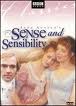
Sense and Sensibility (1981)

Sense and Sensibility was made into a seven-part TV serial by the BBC in 1981. Each part is roughly twenty-five minutes long. As part of the Everything Austen Challenge II, I decided to watch this version of Sense and Sensibility as it is the only version I haven’t seen. As a disclaimer, the 1995 movie is not only one of my favorite Austen adaptations, but also one of my favorite movies of all time.

First of all, I didn’t like the short segments the serial was broken up into. The way the segments worked out, the writers tweaked the storyline to have one segment be about Willoughby, one about Edward, etc. These segments did not give the appropriate build-up to understand why Elinor had feelings for Edward or why Marianne was attracted to Willoughby. Everything seemed abbreviated to fit it into a short segment.

Although this version is longer than the 1995 movie (but shorter than the 2008 mini-series), poor Margaret, the third Dashwood sister, is completely deleted. Most other characters appear. I particularly liked Diana Fairfax who played Mrs. Dashwood, I thought she did an excellent job and it was my favorite portrayal Mrs. Dashwood.

I know this sounds mean, but Irene Richard who played Elinor had some truly terrible teeth. It reminded me of Austen Powers and the joke about bad British teeth. Irene looked like she was continually trying to hide her teeth throughout the series and whenever she did smile, it made me almost fall out of my chair. Tracey Childs did a fair job as Marianne.

Bosco Hogan as Edward Ferrars was unattractive and there was no chemistry with Richard’s Elinor. Robert Swann was a pretty good Colonel Brandon, but Peter Woodward as John Willoughby could not hold a candle to Greg Wise as Willoughby in the 1995 version. Julia Chambers was actually a pretty good Lucy Steele. Instead of always realizing something was amiss with her as in the 1995 version, she actually seemed like a nice girl. If I didn’t know the storyline, her betrayal of Edward would have been a complete surprise. It brought a different aspect to the story.

I think overall this adaptation was poorly written, especially in comparison to Emma Thompson’s excellent adaptation in the shorter 1995 movie. The beginning of the movie in the carriage has very awkward dialogue and camera angles. Other scenes were also very awkward, the one that comes to mind is Fanny’s screaming at Anne’s telling her about Lucy and Edward’s engagement. It was such bad acting that it was actually quite funny. Another awkward scene is when Edward comes to the cottage at the end, Elinor runs off while Marianne and Mrs. Dashwood just laugh at Edward. The scene pales in comparison to the quiet power of the same scene in the 1995 version. The ending was very odd with Colonel Brandon giving Marianne some books and calling her “my child.” It did not seem romantic at all and was rather abrupt.

Overall, I think the 1981 mini-series was a poor adaptation of Sense and Sensibility. It was interesting to watch, but both the 2008 mini-series and 1995 movie were much better. The 1995 movie is still my favorite adaptation.

This was my ninth item for the Everything Austen Challenge II.